Showing posts with label literature. Show all posts

Sunday, January 10, 2010

Watchers


Watchers by Dean Koontz


It's a been a while since I've written a review here, life has taken me all sorts of crazy directions the past few months. I hadn't been reading a whole lot, but I'm picking it up again.

To break my hiatus, I went with Watchers by Dean Koontz. I've read a couple books by Kean Koontz, the most memorable being Tick Tock. I haven't written about that book here, but I will in the not to distant future because I do want to read it again.

Anyway, Watchers was a great read. I haven't read a whole lot by Dean Koontz, but it seems his stories are usually straight fiction. This one takes cues from Michael Crichton in that there is some science behind the fiction. It's a little far-fetched, but plausible.

The protagonist is Travis, a man down on himself, and on his life due to a tragic loss of his family. In the throes of despair, he happens upon a dog he names Einstein. He soon realizes that Einstein is no ordinary pooch. The dog saves his life on two levels. First from a physical threat, and second from emotional oblivion by leading him to the beautiful recluse, Nora.

The truth behind Einstein's unprecedented abilities is soon brought to light, and there is another creature out there that shares Einstein's origins, but with a malevolence to equal Einstein's benevolence. Now it is Travis' turn to protect Einstein from both this evil kin and from those that brought them into this world.

Like any good science fiction story, this one uses the science and fiction as props to tell the underlying story of relationship. Here, it is a heartwarming story of love, friendship, and loyalty between Travis, Nora, and a unique being named Einstein.

Not as fun as Koontz' Tick Tock, and not as scientifically rigorous as Crichton, but a solid feel-good read non-the-less.


Sunday, June 8, 2008

Them Old Cowboy Songs

So I was driving home one day and tuned to the local public radio station. It was a reading of some story, but I really didn't like the voice talent but I lingered a little longer.

It turned out to be a stunning short story titled Them Old Cowboy Songs by Annie Proulx. I had no idea who Annie Proulx was until I got home searching for more info on the story. Turns out she was the author of another short story, Brokeback Mountain. I neither read that nor saw the movie, so I can't comment on it.

Them Old Cowboy Songs is a short story that ran in the May 5th, 2008 New Yorker magazine.

The story is set in 1885 and like most (or all?) of Annie Proulx' stories, in Wyoming. A young man named Archie marries a young woman named Rose. They set up a homestead out in the prairie. Archie goes out in search of ranch-hand work leaving Rose at home pregnant.

Here's the spoiler: Rose has a difficult premature labor, the baby dies and she dies alone in the little house in the prairie. No one finds out until the next spring. Archie, while working on a ranch, also dies in a blizzard. And being a nobody cowpoke, no one really takes note.

That's it. It's a story of two people, about to make a start in the world... they die, and no one cares... and the world goes on.

It's horrifying because it makes one look at the truly insignificant nature of our lives. We are truly of almost no value in the grand scheme of things. The only value is to us and those close to us. How depressing.

Despite the depressing nature of the story, I was moved by how effective the short story was, how it perfectly captured these two people, how it made the reader sympathize with them, yet how it cast no negative light on the 'way things are.' I did not mourn for either character, but I was compelled to look at myself and my own little life.

A must read.

Friday, May 30, 2008

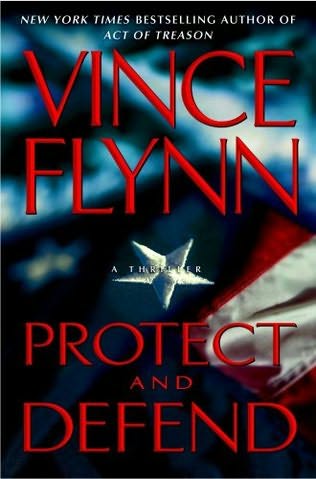
Protect and Defend

Now, I'm trying to catch up on all my reading, so I'm writing these posts out of order. Along with this Vince Flynn novel, I've recently read a couple John Nance books, a Jonathan Damien book, and Richard Marcinko books. All these books relate in some fashion to the military, or at least to the the Intelligence branches of the military or FBI in some fashion. I must compliment these authors on their meticulous research. It doesn't hurt that these guys are real-life participants (Nance, Damien, and Marcinko) in the fields they hash out in their novels. I don't know what Vince Flynn's background is, the book jacket says nothing other than that he went to college, but his characterization of the CIA falls right in line with these other authors, so I take it Flynn did his homework.

The protagonist is Mitch Rapp, a top CIA operative thrust into a middle-east political cauldron. The book has a 2007 copyright and you can tell, because it encapsulates the present-day, real-life political and military tensions in the middle east.

The novel goes behind the scenes into Iran, where the government leaders are in deep disagreement about engaging the U.S. in war. A covert Israeli operation that destroys a secret Iranian facility gets pinned on the U.S. by the the Iranians, though the U.S. had nothing to do with it.

As with Jonathan Damien's Catchers in the Sky (a fictional novel about the present day conflicts on the Korean peninsula), ne'er-do-wells take the opportunity to drag the U.S. into military conflict. Enter Mitch Rapp who is tasked with saving the kidnapped CIA Director and keeping the U.S. out of war with Iran.

Mitch Rapp is a very cool operative. Like Dick Marcinko, he is a brutal, merciless killer who luckily is on our side. Unlike Marcinko, Flynn is masterful in his prose and story-telling. Liberals beware, you'll be steaming half-way through the novel. Otherwise, read on!

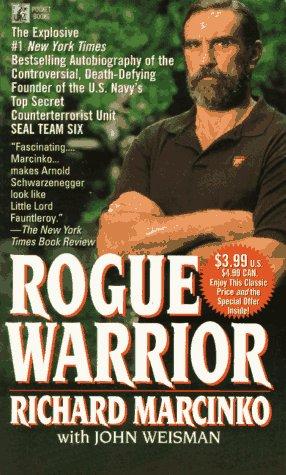
Rogue Warrior


Oh this was a guilty pleasure, indeed. Let me give a little background on the Rogue Warrior:

Richard Marcinko was a real-life Navy SEAL grunt-cum-officer. Rogue Warrior has become a bit of a franchise and the rest of the books are supposedly fictional, but this first one is supposedly autobiographical. I've done no research on this, so I can't say how truly biographical it is.

I'll say that it's a tall tale he tells. And his writing style is, well, the closest I can compare it to would be Kinky Friedman. Think Kinky Friedman with less style (if that's possible) and about twice as much vulgarity. None-the-less, I couldn't stop reading it. But you know, I make it sound like Rogue Warrior is as baseless as Kinky's work, but this is not quite accurate. There is a good bit of wisdom in Rogue Warrior, but the writing style is simply awful... yet engaging!

Now, I simultaneously read three Rogue Warrior books (Rogue Warrior, Rogue Warrior: Detachment Bravo, and Rogue Warrior: SEAL Force Alpha) and because the 'sequels', though fiction, follow the same vein as the autobiography, it all gets a bit confusing. I did start with Rogue Warrior and shortly after began one of the other books, and I distinctly remember thinking that the autobiography was a much better read. But in the end, it all blends together because it's the same thing over and over, so I won't bother making separate entries for the other Rogue Warrior novels.

Again, I'm making it sound like this is trash, but it's not... but it is! Were this total fiction, I don't think I would be so interested, but because Richard Marcinko was the real-deal, and I imagine the stories somewhat reflect some of his misadventures while in the Navy, I was very engaged.

If you've ever been associated with the military in any fashion, I think you would enjoy at least the first Rogue Warrior. In fact, if you can tolerate gratuitous profanity, I think anybody would enjoy Rogue Warrior. On a recent roadtrip, to keep me awake, my wife started reading one of the three books to me, and she got hooked... and she's the type that reads Karen Kingsbury and watches Gilmore Girls.

So anyway, I wouldn't say this is a must read, but if you like a little bit of Kinky Friedman-type junk with a bite, go for it!

Terra Incognita

So wifey heads to the library again and returns with a this gem. Never heard of the author before, but wow is this fantastic.

I am not a student of history and even if I had been at one point, my memory does not serve me well, so I have no idea if the period setting is at all accurate, but it sure felt right to me.

So the novel is set in the early 2nd century a.d., in Britannia (which is, I take it, present day Great Britain). A Roman doctor accompanies his Roman Legion on a visit to some distant part of the Roman Empire in Britannia and there he falls into a murder investigation.

It's a wonderful story of mystery and treachery and even a little bit of mushy romance of sorts.

Apparently this is the second book in a series starring Dr. Gaius Petreius Ruso, the first being Medicus. The novel is engaging, funny, and tight. It is full of memorable quotes, sheathed in humor. I started noting some quotes, and I have a bunch of pages earmarked, but alas I believe the book must return to the library before I'll have a chance to write them down. Oh well.

This series, I believe, would make a simply marvelous movie or even a cable television series. I don't believe this true of all good books. VI Warshawski, for example. I very much enjoy VI novels, but I don't think it would make a good transition to the screen. I know there was a movie somewhere in the 80's starring Kathleen Turner about VI Warshawski, but I never saw it, nor do I want to, as I just can't see it doing the print VI any justice. But again, I do think Dr. Ruso would make a marvelous transition. Oh if only I were a producer!

Thursday, May 15, 2008

Terra Incognita

I'll fill in some more details later, but there are some great quotes in this book and I want to start logging them as I'm sure there will be more great ones

The shopkeeper was too dark to be a native. He wondered how far the man had traveled to end up selling everthing on the edge of the empire, and why he had bothered. - Ruso

Tuesday, October 16, 2007

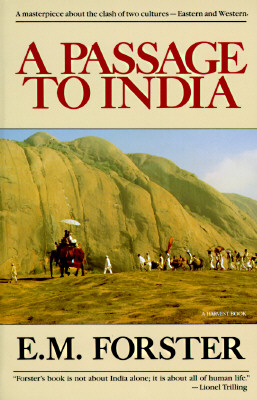
A Passage to India


This is about the book by EM Forster. I listened to the audio book. WOW!! What a tremendous read. I don't think I've been this excited about a book in quite a long time. The book was published in 1924.

I don't know where to begin in explaining why this novel is so magnificent. Let me begin by saying that the audio book version I listed to was read by Sam Dastor. Amazing voice performance. I couldn't find too much about him on a quick google, but I did gather that he was born in India, but is either British or moved to England. At any rate, he masterfully invoked over a dozen different distinct voice personas, with consistent delivery throughout the narration. His Indian sounded true, as did his British.

The novel is set in the 20's, in India, during British rule. The novel's protagonist is Dr. Aziz, a young Indian, who, while attempting to befriend and honor some British folk, is mistakenly accused of 'almost' assaulting a British lady. If you really want to know the details of the plot, look at the wikipedia entry. However, with this novel, the plot seems to be incidental. The real driving force of the story is the magnificent representation of the social climate, the characters, and the Indian landscape. And the effect is perfect. While Heart of Darkness is flat and ineffective in looking at British Imperialism, A Passage to India is full, rich, expressive, and convincing in its portrayal of the British Raj. It highlights the appalling racial inequity and racism in the Raj with superior prose and devoid of any propaganda. It creates sympathy for most all the characters, despite their sometimes serious flaws. Truly moving.

The novel is rife with wisdom, some conventional, some profound. Because of this, I will be buying this book, to keep on my shelf at arm's reach. Yeah, it's that good. I put the 1984 movie version, directed by David Lean, in the netflix queue. The reviews seem to be really good, but as is often the case, I fear the movie will either not live up to the book, or will twist it into something entirely different. We shall see... but not anytime soon, it's #200 or something on the queue!

Wednesday, September 26, 2007

Heart of Darkness


I read something in high school, or at least I think I read this... it's been many years now, you know... well anyway, I remember reading something, it might have been a short story or a novel, it could have been a poem, or even a reading out of some reader... The only thing I can be certain of is the impression this reading left.

The moral I carry with me, from this reading, is that when one seeks to enslave and control something (or someone), one instead becomes a slave to it.

I think the setting was British imperialism in either Africa or India, where some great white man thought himself quite alright enslaving a native population, but in the end he found that he was the real slave. I put the question to Yahoo answers, but got only reading suggestions I had come up with on my own. One being A Passage to India by E.M. Forster, another being Heart of Darkness by Joseph Conrad. Reading plot summaries of these, I didn't think either of these were it, but I got them on CD anyway to make sure. Why? Because it's driving me mad to know what this freakin' reading actually was!!!

So I listened to Heart of Darkness on CD. Before having listened to the novella, I read a bit about it on the web. All kinds of deep, metaphorical meanings are attributed to it and the title, about how it relates to the darkness of man. I know my high school AP English teacher would have a conniption, but I honestly thought it was nothing more than an eloquent yarn, a tale. And it seemed very Euro-centric: unapologetic about the imperial marginalization of natives and lauding the virtuosity of even idiotic white men. I was unimpressed. And I thought this was perhaps because I am only a quasi-intellectual.. but then I read the wikipedia entry and learned I was not alone in my opinion. A Nigerian writer, Chinua Achebe criticized Heart of Darkness in a 1975 lecture, An Image of Africa: Racism in Conrad's "Heart of Darkness." I'm too tired to look into this lecture more, but from the wiki snippet, I think Achebe was right on.

Heart of Darkness was probably autobiographical, and so I think it was just a tale of a trip up a river in Africa under European imperialism, with white men being all super-duper wonderous and the natives being seldom more than 'niggers' unless they served the white man in some capacity. Were I teaching a literature class, I would offer this book as nothing more than an example of the times. I could find nothing deep here. Darkness in man's heart? Oh wow, what a revolutionary concept.

I don't think this was 'the story,' though. The character Kurtz does end up controlling a tribe, and goes mad in the process... on second thought it may have been it. I could very well imagine my AP English teacher, Mrs. V. (name withheld to protect the innocent) coming up with some dictation that in enslaving this tribe to pursue his own greedy wants, Kurtz became a slave to the ivory he feverishly (literally) sought and to the tribesmen he used to get it, and in the end losing his life because of it.

Perhaps I'll never know.

Wednesday, September 19, 2007

Fire Sale

Another VI Warshaski novel, another good read. This time VI is thrust back into South Chicago (her childhood haunt) where a charitable stint as a high school basketball coach lands her in a web of corporate malfeasance, neighborhood activism, arson, and murder.

Religion takes a negative hit in this story, and I haven't really noticed if a negative view of religion is a common theme in Paretsky books. It was in both Ghost Country and Fire Sale, with religion and faith viewed antiquated, useless, hypocritical, or even harmful. Paretsky tries to be coy about it, presenting religion and faith in a matter-of-fact fashion with little narrative judgment, but we know that framing and lighting can be everything.

Regardless, the story is riveting. Another thing I'd like to point out is the fact the story is set in Chicago, as that is where VI hails from. But Chicago seems to be a commonly used back-drop. Chicago seems to be popping up everywhere for me. It's in all the Paretsky books I've read lately. Time Traveler's Wife was set in Chicago. And while watching the first episode of Buck Rogers in the 25th Century on Netflix instant view, it was revealed that Buck Rogers hailed from Chicago as well. What is it about this town? I was there twice while I lived in Madison, WI. My wife and I spent a weekend in the middle of winter there, walking around in the cold, eating at great restaurants, and riding around in the horse-drawn carriages. Then we spent some more time one summer with my eldest daughter (an infant then) visiting sites and museums. I do have a visceral infatuation with Chicago, and I'm not sure why. I think... I know that I will be spending some time there in the future, but I can't know why...

Anyway, thumbs up on this one.


Fire Sale - VI Warshawski
Sara Paretsky
Putnam 2005

Sunday, September 16, 2007

The Time Traveler's Wife


Now this is a book that would rank on my friend Lisa's "how I know you're gay" list. My wife was reading it and got engrossed in some other book. I was between books and it was by the bed, so I started reading it, although the title and the cover art made it a book I would never read in public!

But I must say it was good. The story is about a man named Henry, who has a genetic disorder that makes him prone to being chronologically displaced, i.e. he time travels. It's also about his wife (thus the title), Clare. If you are science-phobic, fear not, for the book makes no attempt to explain the science behind theoretical time travel. I think we would need Michael Crichton for that job. But this truly does not distract from the story, because how the time travel occurs is utterly inconsequential. What's important is that it does. Rather than time travel being an event arising in the story, it is what allows the story to unfold. And the story is entirely about the relationship between these two people, as it transcends linear time.

Despite it being a somewhat idyllic love story, I found the story riveting because of my recent piqued interest in determinism. As I noted in my 27 Aug 2007 entry about the movie Premonition, it seems the consensus that any attempt to change fate, fulfills it. It holds true in this book, and in the end, it makes perfect sense to me, and sits quite well.

Most of the story is told from two points-of-view, Henry's and Clare's. A superb approach for a couple reason. First, it allowed a much more intensive interpretation of the various scenarios. Something that a single first person perspective, or a third person narrative could not have done. The third person narrative may add an omniscient view, but it essentially becomes a single point-of-view. This multiple person narrative gives us two, and it's much richer. Second, it allowed me to keep on reading. I'm not sure I could have continued through the story had it been strictly Clare's narrative. I could relate and better understand Henry's narrative, so it kept the story progressing for me, even when Clare's narrative became too ethereal.

Kudos to Niffenegger on her debut novel. Change the cover art and I think this book might find a male audience, beyond the Oprah crowd.


The Time Traveler's Wife
Audrey Niffenegger
2003, Knopf Canada

Tuesday, September 4, 2007

Ghost Country

So Wifey saw how much I enjoyed the last Paretsky book I read, and so dug up Ghost Country at the library. Total Recall was 2001, and Ghost Country goes back even further to 1998. Certainly not a new release, but a great read.

A side-note on Total Recall. The Paretsky book has nothing to do with the Arnie move, but in one of the recent issues of The New Yorker, I learned that the movie was based on a book by Philip K. Dick. Looking at Wikipedia, it says it right there (what doesn't Wikipedia know??), but the Total Recall movie was so unremarkable, other than being a great (albeit bizarre) action flick, that I never would have bothered looking it up. I'm not enough of a science fiction fan to go down this road, but if you are, you should definitely look into Philip Dick novels from waaaay back in the day. I'll admit I haven't actually read any of his novels, but the long (as all New Yorker articles must be) article made clear that his works are 'interesting' in the vein of H.G. Well's Time Machine or Ray Bradbury's Martian Chronicles, though never considered on the same literary level. Dick, it seems was a prolific pulp writer. Time Machine and Martian Chronicles were required reading in high school lit, but at the time, they seemed confusing mumbo-jumbo. Thinking back, I guess my 15 year old psyche was not ready for the social undertones of such works. But it seems Dick also brilliantly addressed our human condition through nutty fiction novels. And please don't tell me Time Machine and Martian Chronicles were not nutty.

Whoa, that was quite an aside. Back to Ghost Country. Not as fast paced as VI Warshawski books, but engaging none-the-less. Here, Paretsky takes to the homeless underworld of Chicago. I can't help but wonder if she based it on some even happening in Chicago at the time, but I'm too tired to go googling for this right now.

The story takes a couple prominent families in Chicago, with family members of dubious character. These family members fall into the homeless underworld and all hell breaks loose. It wasn't as preachy as I thought it would be about homelessness. Which I'm glad. In my rec reading, I don't need social lectures, but it spoke strongly about human relationships, which I always enjoy. Let's just say it made me look at my sleeping daughters and strengthened my resolve to love, cherish, and support.

I am also a Stephen King fan. Needful Things was a superb work, though rife with tragic ends. In Ghost Country, there is a culminating scene at a church that took me back to the culminating scene of Needful Things. The savage results of mob mentality, in the name of religion. It was pretty powerful in both stories, though Ghost Country spent but a couple chapters, while Needful Things was devoted entirely to the topic. Religion was just the vehicle, though, in both stories. I also don't think mob mentality was really the focus, either. I think the real statement is about the ugliness inside us all. The horrible, ugly truths that lie just beneath our polished veneers. No-one is immune really, and our only salvation is in how we deal with it. So, let the knight say of you, that you have chosen wisely.... if you really do have free will at all.

Wednesday, August 22, 2007

Total Recall

No, not the movie, but the book by Sara Paretsky. I mentioned in the AG Chronicles blog when i started reading this book, and I am horrified that it took a month to finish it. It should have taken me a few days at most. I am not doing very well at keeping up with my reading list.

Anyway, I've read two or three VI Warshawski books, and enjoyed them thoroughly. Total Recall is no exception. I stayed up till 3am or so to finish the last quarter of the book, it was so engaging. Paretsky is masterful at setting up the scenery. I remember that in the other books of the series I've read, it was Chicago. In this book, Chicago is the main backdrop, but World War II Europe also makes an appearance.

I like these Paretsky books because they are quite sophisticated, meticulous, yet a whole lot of fun. Victoria, as the protagonist, is easy to relate to. Yet many of the characters in the stories are, by their nature, of a world beyond mine... but Paretsky brings them to my level, for me to see and study. Journalists, doctors, executives, politicians.

This installment had the typical gum-shoe detective work that makes VI so engaging. But an added element really took me aback. The story dug back into the WWII history of Victoria's friends, Dr. Herschel and Max Loewenthal. It masterfully tied the Chicago insurance industry to the Holocaust, using the vehicle of a seemingly mundane fraud investigation. Modern day murder and the horrors of war and the Holocaust are seamlessly weaved into the storyline so that it never becomes too burdensome for recreational reading. These books are the best. They serve primarily as entertainment, but educate along the way.

I am always amazed at either the great depth of knowledge good authors like Paretsky have, or the thorough research they do for their books. I typically am impressed by the well researched scientific basis of science drama authors like Michael Crichton (last book I read being Prey, most excellent). In Total Recall, it was history rather than science, but equally impressive. Unfortunately, I can't say I'm an aficionado of history (unless it involves biographies of the titans of industry) as I am of science, so I can't really say whether the history is accurate, but it sounds accurate. And I trust Paretsky enough to believe she would be painfully accurate in her portrayal of the Holocaust and its survivors. For her to not be accurate, would be a discredit and a destruction to her and to her characters, whose history defines them.

So, a thumbs up. Wikipedia says that the VI Warshaski series goes back to 1982, with 12 novels in all, two since Total Recall (2001). With so much on my reading list, I won't add them to my queue, despite the fact I enjoy them so much. I'll leave it to my wife to find me recreational reading books. She does a great job and thanks to her, I've discovered some marvelous authors and reads I wouldn't have found had I focused on a few authors.

Wednesday, July 18, 2007

The Man in the Hut

I like David Sedaris. I've read a couple of his books, some of his short stories, and I even listened to a radio broadcast reading by him. I'm thoroughly enchanted by him. The wit of Dave Barry, sans the cerebral bent, which is refreshing.

David Sedaris is simply a joy. What a treat to find a piece by him in the New Yorker.

I can't say I took anything profound away from this essay. As seems to usually be the case, Sedaris seems to simply chronicle life, comically highlighting irony and ridiculous outtakes. Here, he talks about, well, a man living in a hut in the village in Normandy where Sedaris lives with his partner, Hugh. The man in the hut is Jackie, who is living a caricature life of a modern day French peasant on the downslope of life.

Sedaris exposes, as usual, his deep insecurities, submissive nature, and generally dysfunctional personality. All framing his looking glass observation of Jackie, sliding from a sadly mundane life to disgrace to illness to death.

Clearly not a happy story, but funny, and weighs as another citation of the human condition.

Sedaris, David. "The Man in the Hut." The New Yorker 4 June 2007: 48, 53-55.

Fashion bug

No one can accuse me of being a fashionable guy, save special occasions. And just because I often look like I put on whatever I tripped over on the way to the bathroom, it doesn't mean I don't admire fashion.

I have four obstacles that impede my claim to fashion: First, I have little idea what is fashionable. Second, I don't have much money to spend on fashionable clothes. Third, I don't always find the time to put together a daily ensemble. Finally, I don't always think I look good enough to be in fashionable clothing.

However, I still desire to be fashionable. In fact, a big part of the Body department of the AG Project is outward appearance, which includes dress. So why desire something that comes seemingly unnaturally to me?

In the June 4 New Yorker, a piece by a Lizzie Widdicombe in the Talk of the Town anecdotally captured why. The piece is about a high school boy, Robert Asch, nearing his prom, who emails Duckie Brown (an "eccentric menswear label" out of New York, presumably) about fitting him out with one of their ensembles for the event. The two partners, who make up the small-time home-run label, agreed. Asch, from New Jersey, comes to their studio and gets fitted. Widdicombe writes that when done, "Asch moved his arms around: 'I feel fantastic.'"

Exactly.


Widdicombe, Lizzie. "Prama." The New Yorker. 4 June 2007: 33-36.

Friday, July 13, 2007

Business Ethics & Multiple Intelligence

I once, while in college, received a subscription to a publication called Strategy + Business published by Booz Allen Hamilton. I never knew who gifted me this subscription, but I found the magazine profound. It had no b.s., just many solid articles on business. It didn't have the glossy, dumbed down glam of Time, but rather the serious intellectual quality of the New Yorker. No 'Ten Ways to Make Your Business Succeed' type articles or 'Ask Don' columns. Anyway, as part of this project, I subscribed to this publication as reading material for career and mind.

I'm in the middle of an article (Howard Gardner Does Good Work by Lawrence M. Fisher). Howard Gardner is a Harvard professor in the School of Education. His relevance to business comes from his scholarly linking of cognitive development and leadership ability.

First, I admire Howard Gardner for his lifestyle. A brilliant, but frugal man who lives a professionally ethical life. Second, I like what he has to say about business ethics. When presented with the question of why should businesses concern themselves with anything more than making money (i.e. ethics), Gardner states that the survival of business may depend on it.

How bold! How profound! How true... Fisher paraphrases Gardner,
...so too could corporate enterprises be rejected by the body politic -- consumers, employees, and even shareholders -- if they fail to generate wealth for more than a privileged few. If given a choice, he [Gardner] believes, knowledge workers will flock to companies that embrace high standards of excellence and that allow them to feel engaged with society, leaving other firms with the less talented, less motivated members of the workforce.
I have always felt this, but haven't put it so eloquently. In my business aspirations, I have always believed that I needed to not just make money (let there be no doubt that I want to make money), but to fulfill a social need and create economic and social wealth for the community my businesses operate in. I want my employees to be better compensated than anyone else around and that the communities they live in provide them a higher quality of life. Sort of like the utopia Milton Hershey envisioned for Hershey, PA, but rather than providing everything, I want to endow the employees and community businesses with the ability to do it themselves.

Another quick mention in the article is about Gardner's other studies. There are two that caught my eye. The first put forth in his book, Five Minds for the Future. The second in Creating Minds. Both of these I'll put on my reading list.

Five Minds "posits five sets of congnitive capabilities that will be needed...by any successful citizen, professional, or businessperson. These include the 'disciplined mind,' the 'synthesizing mind,' the 'creative mind,' the 'respectful mind,' and the 'ethical mind'" (Fisher). The article sprung forth from this last 'mind,' but I find a great interest in reading more about the others.

Creating Minds
interests me because of my daughters. Fisher writes of the book's posit, "Children do indeed know how to play, but achieving sustained creativity requires first mastering a particular domain, whether classical piano or particle physics, which in turn requires at least 10 years of intense study, generally amid a community of supportive individuals." I've suspected this after watching my 6 year old daughter jump from activity to activity, never spending more than a couple weeks learning anything. Karate, gymnastics, dance, theater, t-ball, ballet, horseback riding, authorship, singing... they never lasted and I can't say she actually achieved any true understanding, much less mastery, of these disciplines. I know that I've found in my own life a great difficulty focusing on anything or achieving true mastery over anything. I think it's because I was allowed to "do whatever I wanted" and my childhood and adolescent genius was spent on who-knows-what, rather than focused on any one discipline.

In summary, a great article on a great subject. And an interesting author for me to explore more.

Fisher, Lawrence M. "Howard Gardner Does Good Work." Strategy + Business Summer 2007: 82-91.

Thursday, July 12, 2007

Work Ethic

My wife brings me books from the library she thinks I might find interesting. She brought home Total Recall by Sara Paretsky. What a treat! It's a VI Warshawski novel (yes, the one they made a movie about). I've read one or two in the past I enjoy them thoroughly.

In just the prologue, I've already been stirred. I haven't gotten any further, but apparently there is a character named Lotty Herschel who lived in England during WWII. The prologue is titled "Work Ethic." Lotty observes, "...work was my only salvation... it's a narcotic, the oblivion overwork can bring you." She notes that the Nazis had a slogan over their camps, arbeit macht frei, or work will make you free. Lotty goes on to note, "... work can numb you. If you stop working even for a moment, everything inside you starts evaporating..."

I have mixed feelings about work. I, too, find work a narcotic. For the past seven years, since leaving collegiate studies, I have immersed myself in work. Robotic work. It made the past seven years pass quickly... yet I'm not sure what I gained, other than saying I worked hard for seven years. After I left work my full time job in February, I felt a little lost. I had lost my routine of monotonous work.

Now I'm self-employed and I'll admit it's a bit difficult to adjust. Rather than rote work, I need to perform creative development work. There is no boss setting expectations, there is no SOP for me to follow. I've been conditioned for so long to simply put your head down and work that it's hard to transition to entrepreneurial work.

Like Lotty, I found work a salve. It was my escape. It wore me down over time, however. It drained all my creative power. But I do miss it. I miss being 'productive' in the traditional sense. I miss it to the point that I'm often tempted to pull out the classifieds and start submitting resumes. Just so I can get the high of working. George Foreman was on David Letterman (or perhaps it was Conan O'Obrien) recently, and George spoke about how there was no better feeling than waking up in the morning and having a job to go to.

I agree with George. George is an entrepreneur, however. He doesn't have a typical 8-5 job. He has business ventures, in addition to his sports profession. But it seemed that to him, these were jobs to him. That he gets up every day to attend to his job. I need to do that. I need to structure my life so that my entrepreneurial ventures fulfill that narcotic lust for work.


Paretsky, Sara. Total Recall. New York: Delacorte Press, 2001.